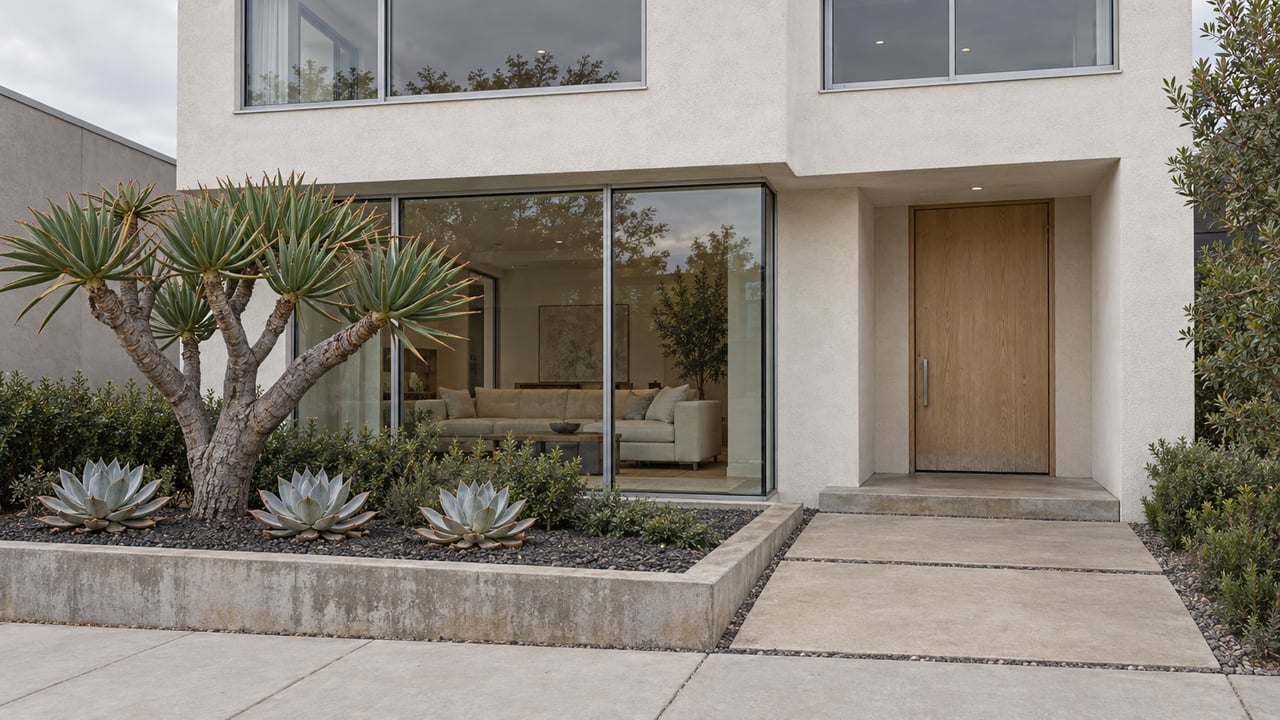
Walk two blocks in La Mesa's Village and you can find a pair of 1920s bungalows listed within a few thousand dollars of each other. Same square footage, same low-pitched cross-gable roofline, same cantilevered front porch with decorative wood brackets that define the Craftsman style all over this part of town. A buyer comparing the two on price alone would assume the monthly cost of owning either one is roughly identical.
It isn't. One of those houses could be carrying a property tax bill 20 to 70 percent lower than the other, and the reason has nothing to do with square footage, lot size, or condition. It has to do with a ten-year contract most buyers never think to ask about until an agent brings it up.
The Three Numbers the Assessor Actually Compares
California's property tax system already runs on more than one number. Prop 13 caps how much a home's assessed value can climb each year after purchase, which is why two neighbors who bought a decade apart can owe very different amounts on identical houses. La Mesa layers a second system on top of that, for houses that qualify.
It's called the Mills Act, a state law that lets participating cities enter into preservation contracts with owners of qualified historic properties. According to the San Diego County Assessor's office, a Mills Act property is valued using a formula based on what the home could earn in rental income rather than what comparable homes have recently sold for. Each year, the Assessor calculates three separate numbers for that property: current market value, the Prop 13 factored base year value, and this income-based restricted value. Whichever of the three is lowest is the number the tax bill is built on.
For most historic homes, that restricted value comes in well under market value, and the county's own materials put the typical savings at 20 to 70 percent off what the property tax would otherwise be. La Mesa is one of a handful of San Diego County cities, alongside the City of San Diego, Chula Vista, Coronado, Escondido and National City, that has adopted an ordinance allowing these contracts at all.
An illustrative example makes the spread concrete. At a roughly 1.1 percent effective tax rate, a home assessed at market value of $850,000 owes around $9,350 a year. If that same home instead sits under a Mills Act contract with a restricted value 40 percent lower, near $510,000, the bill drops to roughly $5,610. That's a real difference in carrying cost, and it shows up nowhere in the listing price.
Three Houses That Already Went Through This
This isn't a theoretical mechanism. La Mesa's Historic Preservation Commission works through cases like this on a regular basis, and the city's own meeting records show how it plays out.
The Roehr House at 4646 Nebo Drive went through landmark designation alongside a Mills Act application, a package the City Council took up together rather than as separate steps. A property on West Point Avenue followed the same pattern, designated as a historic landmark under the city's R1 zoning with a preservation agreement established at the same meeting. In the Date Avenue Historic District, the Updyke Home came before the commission as a potential landmark, with commissioners weighing a proposed addition against the district's existing roofline and scale before signing off.
The Detail That Catches Buyers Off Guard
The City of La Mesa's Historic Preservation Commission meeting records document a preservation advocacy group raising the gap in Mills Act eligibility for historic-district contributor properties, pushing for a policy that would extend eligibility to those properties as well as individually landmarked ones.
What a Buyer Actually Inherits
Here's the part that changes how a buyer should think about the deal. A Mills Act contract runs with the property, not the seller. The term is ten years, and it automatically renews each year, creating what amounts to a rolling ten-year commitment attached to the land itself. When a buyer closes on a Mills Act home, they step directly into that existing contract, tax savings and all, without having to reapply.
They also inherit the obligations that come with it. Properties under contract are subject to the Secretary of the Interior's Standards for Rehabilitation and to the local Historic Building Code, meaning exterior changes go through a review process rather than a standard permit counter. A buyer who wants to swap out old windows, add a second story, or change the roofline on a Mills Act home is working within a different set of rules than a buyer down the street in a non-historic house. That's not a downside so much as a fact that needs to be priced into the decision alongside the tax break.
For sellers, this cuts the other way. A house with an active Mills Act contract is carrying a real financial benefit that a listing sheet built purely around square footage and finishes won't capture. Buyers comparing that house to a similarly priced non-historic option nearby are making an apples-to-oranges comparison unless someone points out the tax mechanism sitting underneath it.
Why the Timing Matters Right Now
La Mesa's list of historic-eligible properties is not static, and it's actively being rebuilt. The city's original Historic Resources Inventory was adopted back in 1983, based on a survey conducted under SANDAG's direction, and it has had only a handful of additions since. The city has partnered with the La Mesa Historical Society and faculty and students from San Diego State University's Department of Anthropology on a multi-year update to that inventory, starting with a citywide reconnaissance survey.
If you're weighing a purchase in the Village or one of La Mesa's older residential pockets this year, it's worth checking whether the house you're looking at already carries a Mills Act contract before you compare prices. That answer changes what the sticker price actually means.
As of September 2026, the typical home value in La Mesa sat at $842,836, down 3.4 percent over the past year, while the median sale price over the three months ending in May 2026 ran closer to $886,000, up 5.8 percent year over year. Numbers like that already leave plenty of room for a tax variable this size to matter. A buyer who only compares list prices is comparing the part of the transaction that's easiest to see, not the part that determines what the house actually costs to keep.
If you want a sense of what this looks like in practice, the La Mesa History Center is marking its 50th year in 2026 and hosting its 20th Annual Home Tour on November 7, a chance to walk through some of the same houses that go through this exact designation process at city hall.
A Few Questions Worth Asking Before You Write an Offer
Does a Mills Act contract automatically transfer to a new owner? Yes. The contract runs with the property, and a buyer takes on both the tax benefit and the maintenance obligations at closing without a separate application.
Can a buyer cancel the contract after purchase? The contract renews automatically each year unless the owner actively cancels it, so this is worth confirming with La Mesa's Historic Preservation Commission before assuming it can be walked away from easily.
Curious whether a specific La Mesa property carries a Mills Act contract, or whether an older home you're considering might be a strong candidate for landmark designation down the road? Edna Mitchell can pull the property's history and walk through what it actually means for your numbers. Get Your Home Valuation, or call to talk through your next move in La Mesa.
This article is general information, not legal, tax or financial advice. Consult a qualified professional about your situation.