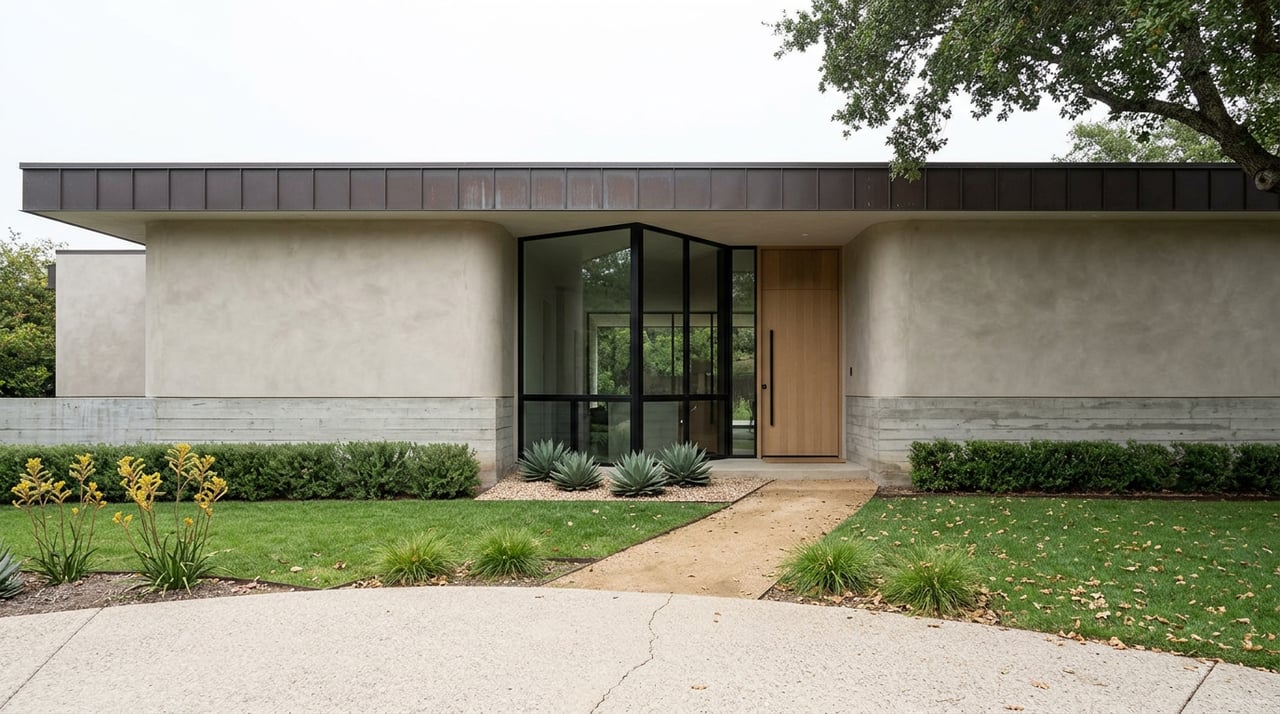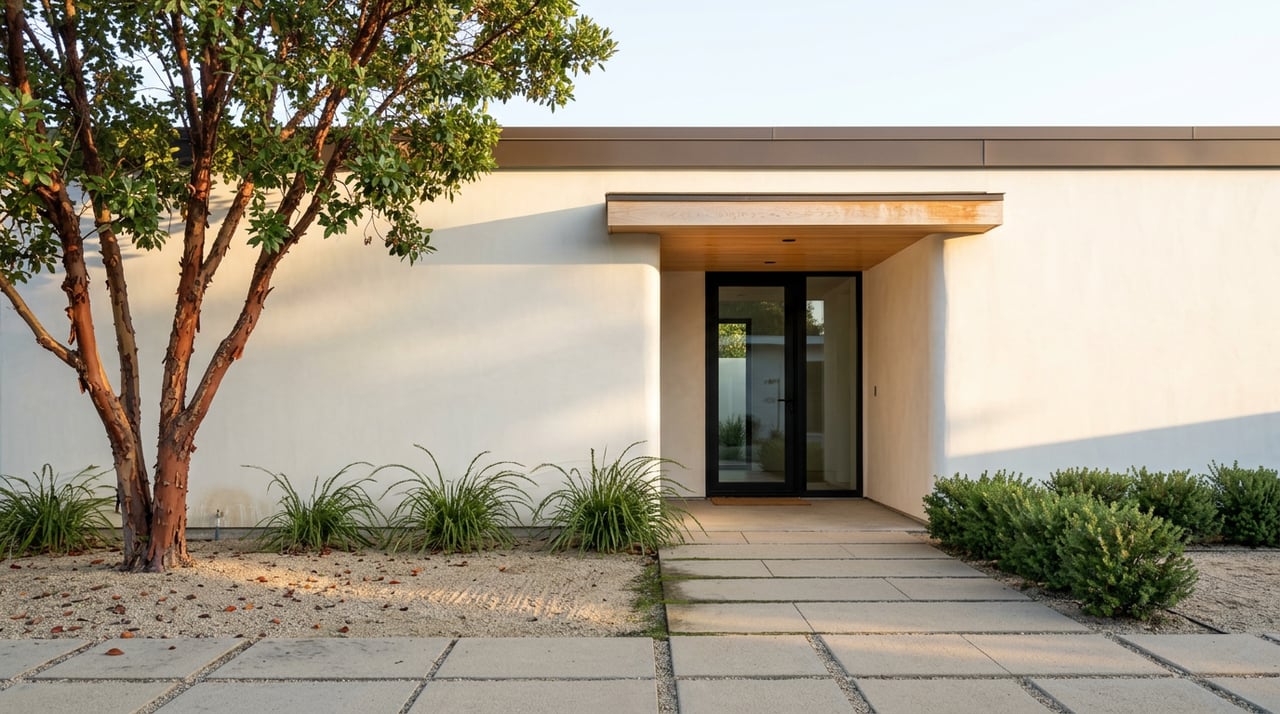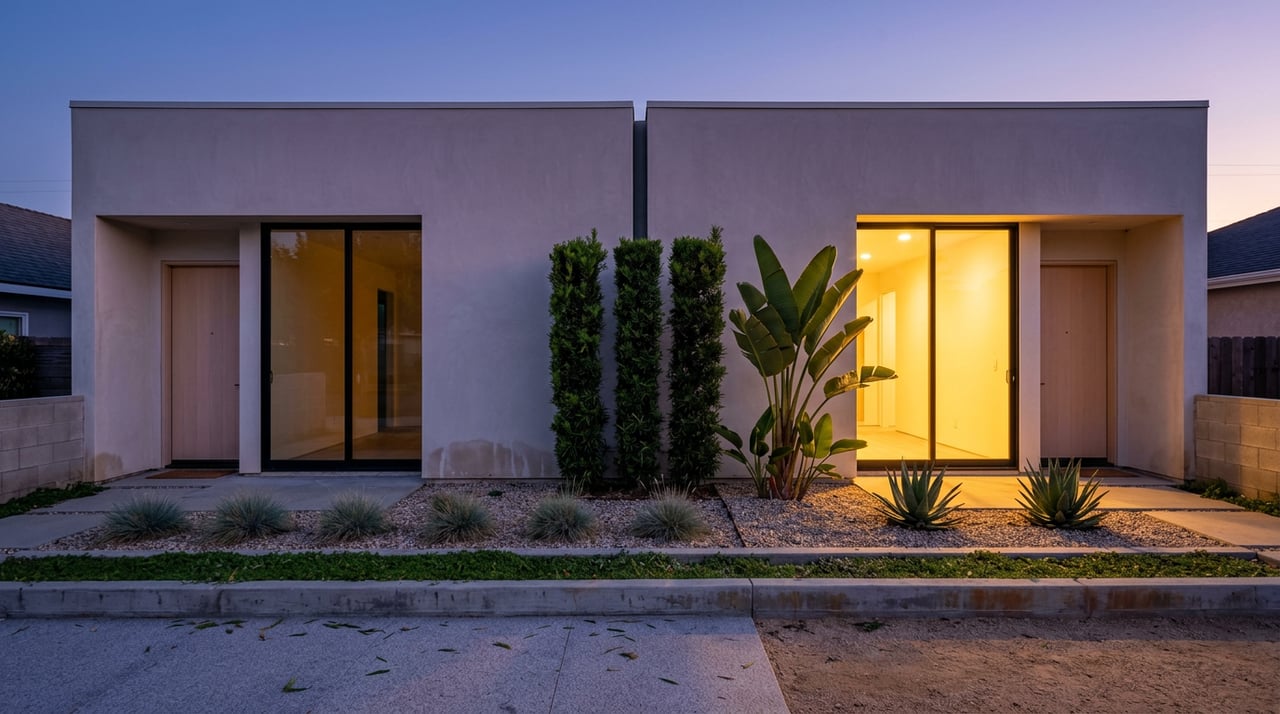
Picture a Navy family with orders to Naval Base San Diego, touring a three-bedroom attached home in Otay Ranch on a Saturday afternoon. The unit has a private garage, a small yard, and a monthly HOA fee that covers the pool and the gate. It looks exactly like the condo two doors down. The listing agent calls it a townhome. The buyer's lender calls it something else entirely, and that word, buried in the legal description on the preliminary title report, is the reason one of these deals closes in 30 days and the other sits in escrow for two months waiting on a committee in Washington.
That word is either "condominium" or "planned unit development." For a cash buyer, the difference is cosmetic. For a VA buyer in Chula Vista's master-planned corridor, it is the single biggest variable in how the next 45 days go.
Two homes, same street, two different loans
Chula Vista's east side, from Eastlake through Otay Ranch to newer villages like Escaya and Millenia, is built almost entirely around attached and semi-attached product: townhomes with shared walls, shared amenities, and an HOA that maintains the common areas. Some of these communities are legally condominiums, meaning the buyer owns an interior airspace and a share of a condo plan filed with the county. Others are legally planned unit developments, meaning the buyer owns the actual lot and structure, the same way a detached single-family buyer does, and the HOA simply governs the shared spaces around it.
A VA loan treats those two structures completely differently. A single-family home, whether it stands alone or shares a wall under a PUD, does not require any separate approval. The VA appraiser looks at the unit, the comps, and the condition, and that is the whole review. A true condominium is a different process. The VA has to review and approve the entire project, not just the unit the buyer wants, before a VA loan can close on any home inside it. If the project has never been submitted, or if it fell off the approved list, the buyer is not stuck waiting on their own file. They are waiting on an HOA board, a management company, and a VA regional loan center to clear the whole building.
There is no shortcut around this. Unlike FHA, which allows a single-unit approval for one buyer in an otherwise unapproved building, VA does not offer that option. The project is either on the list or it is not, and getting an unlisted project reviewed from scratch is not a fast process.
Why the same floor plan can trigger two outcomes
Many of the newer townhome communities in Otay Ranch and Eastlake were built and title-mapped as PUDs specifically because it made them easier to finance across FHA, VA, and conventional buyers alike. That is good news buried in bad terminology. It means a meaningful share of the attached inventory a military buyer is touring in Chula Vista never needed VA project approval in the first place and never will.
The only way to know which category a specific listing falls into is to check the legal description, not the marketing name. A listing that says "condo" in the MLS remarks can still be a PUD on the title. A community that markets itself as a "townhome collection" can still be condo-mapped underneath. The fastest way to check is the VA's own condo search tool, which lists project name, status, and last review date. If the project shows "Accepted Without Conditions," the review is a formality. If it shows nothing, the property may still be perfectly financeable as a PUD, or it may be a condo that needs a full submission before anyone can close on it with zero down.
The mistake buyers make is writing a strong offer first and asking the legal question second. By the time a lender flags an unapproved condo project mid-escrow, the inspection period has usually passed and the earnest money is at risk.
The HOA and Mello-Roos math nobody runs before they fall in love
Even when a project clears VA review cleanly, the monthly stack in Chula Vista's newer villages is not the same stack a buyer sees in an older, west-side neighborhood, and that difference shows up directly in debt-to-income math, not just the sale price.
Take a realistic example: a $665,000 attached home in Eastlake at a VA rate near 6.125 percent, zero down with full entitlement, no funding fee if the buyer is service-connected. Add property taxes around 1.15 percent, which includes the Mello-Roos special tax common in newer Chula Vista construction. Add homeowners insurance around $55 a month for an HO-6 walls-in policy. Add an HOA payment of $420. That full PITIA lands close to $4,970 a month, which is roughly $1,100 over what an E-6's BAH covers on its own. To bring that same deal inside BAH without touching rank or income, the buyer is really looking at something closer to a $525,000 price point, which in practice means a smaller one-bedroom unit, an older two-bedroom west of Interstate 805, or waiting for a higher pay grade.
| Factor | Newer Eastlake or Otay Ranch attached home | Older west-side single-family, no HOA |
|---|---|---|
| Typical HOA | $380 to $520 a month | Usually none |
| Mello-Roos | Common, roughly $1,500 to $4,000 a year | Rare on pre-1990s parcels |
| VA project review | Required if condo-mapped | Not required |
| Trade-off | Newer construction, amenities, shorter commute to the bridge | Larger lots, older systems, no shared review risk |
Mello-Roos is not unique to VA buyers and it is not hidden information. California requires it to be disclosed, and every parcel's exact special tax district and current levy can be looked up directly through the San Diego County Auditor and Controller's active CFD list or the County Assessor's Mello-Roos page using the property's parcel number. What catches buyers off guard is not the existence of the tax. It is the fact that it counts toward debt-to-income the same way a mortgage payment does, and a $200 or $300 monthly add can be the difference between a file that clears and one that needs a smaller loan amount. I've walked through this exact scenario for Chula Vista buyers before, and the short version is always the same: pull the parcel number before you fall for the floor plan.
Why an approved building in 2022 can fall off the list by 2026
The VA's approved condo registry is not a permanent record. A project's status can change for reasons that have nothing to do with the buyer. California's newer balcony and elevated structure inspection law, often referenced as SB 326, has pushed several older complexes into expensive repair findings that drained HOA reserves. When reserves drop below what a VA review expects to see, the project can lose its approved status until the HOA rebuilds the fund or completes the repairs. Rising insurance costs across California have had the same effect, since a lapsed or reduced master policy is one of the fastest ways a previously approved building becomes unapproved.
There is also a structural reason newer construction carries more of this risk than older stock. California gives buyers up to ten years to bring a construction defect claim, and much of Otay Ranch and Eastlake's attached housing was built within the last two decades, meaning a meaningful share of it still sits inside that window. A pending defect lawsuit is one of the most common reasons a VA project review stalls or gets denied outright.
None of this means newer Chula Vista communities are a bad bet for a VA buyer. It means the project's paperwork matters as much as the unit's condition, and that paperwork can shift between the day a buyer starts looking and the day they write an offer.
Before you write the offer
- Pull the legal description or preliminary title report and confirm whether the property is condo-mapped or a PUD, not just what the listing calls it.
- Check the VA's condo search tool the same day you write the offer, since status can change without notice.
- If the project needs a fresh submission, ask for the HOA's current budget, two years of meeting minutes, the reserve study, and the insurance declarations before you waive any contingencies.
- Ask your lender to stress-test the file with HOA dues set 10 percent higher than the current rate, since a mid-escrow increase or special assessment can push a clean approval below residual income.
- If the timeline is tight because of PCS orders, ask your agent to prioritize PUD-titled or fee-simple properties, since they skip the project review entirely.
A few questions worth asking before you tour
Does a listing that says "VA-approved" mean the loan is guaranteed? No. Status on a listing can be outdated. The registry updates as insurance, reserves, and litigation status change, so verify it directly through the VA's own tool the week you write an offer, not the week you started looking.
Can I get my individual unit approved even if the building isn't on the list? Not with a VA loan. FHA allows a single-unit exception in some unapproved buildings. VA does not. The entire project has to clear review before any unit inside it qualifies for zero-down financing.
If a building falls through, is a PUD really a good substitute? Often, yes. Many Otay Ranch and Eastlake townhomes are legally PUDs that finance exactly like single-family homes, with the same amenities and HOA-maintained common areas, minus the project-approval risk. It is worth asking your agent to flag PUD-titled listings specifically if a tight PCS window makes financing certainty more important than a particular floor plan.
VA financing rewards buyers who ask the boring legal question before the exciting design question. If you're weighing a Chula Vista purchase against a PCS timeline, or trying to figure out whether a specific Otay Ranch or Eastlake listing is going to sail through underwriting or stall on a committee review, that's exactly the kind of detail a lender's-eye view catches before it costs you a deposit. Edna Mitchell spent years underwriting loans before she started selling homes, and she still runs every Chula Vista listing through that same lens for her military clients. Get Your Home Valuation, or call to talk through your specific PCS timeline before you write an offer.