Wondering how to choose a home in La Mesa that can still work well for you years from now? That question matters even more in a city where many homes are older and where a significant share of residents are already 65 and older. If you want a home that supports comfort, safety, and independence over time, a little planning now can make a big difference later. Let’s dive in.
Why aging in place matters in La Mesa
Aging in place means staying in your own home as you grow older, and the National Institute on Aging says the best time to plan is before you need a lot of care. That is especially relevant in La Mesa, where the Census Bureau estimates 21.7% of residents are age 65 and older.
La Mesa also has a housing stock that dates back to the early 1900s in several areas, according to the City’s adopted housing element. Older homes often bring charm and character, but they can also come with stairs, narrow passages, dated bathrooms, and lighting or layout issues that may need attention over time.
The local numbers show why this topic is so important. The Census Bureau estimates a median owner-occupied home value of $812,000 in La Mesa, and the City found that 60.79% of senior-headed households owned their homes. When home values are this significant, choosing the right layout and long-term fit becomes a major financial and lifestyle decision.
Start with layout first
If you are searching for the right La Mesa home for aging in place, the layout should come before cosmetic details. Paint colors, counters, and finishes can change later, but the basic floor plan has a lasting impact on how well a home functions.
The National Institute on Aging recommends features like a step-free entry, a bedroom and bathroom on the first floor, accessible routes, and a kitchen that can work for changing mobility needs. In practical terms, that often means looking first at true single-story homes or homes where daily life can happen entirely on the main level.
A multi-level home is not automatically off the list. The key question is whether the first floor can realistically serve as your long-term living zone if stairs become harder to manage later.
Look for main-level living
A strong aging-in-place layout usually includes:
- A step-free or low-step entry
- A bedroom on the main floor
- A full bathroom on the main floor
- Kitchen, living, and laundry areas that are easy to reach
- Clear paths through the home without tight turns or level changes
If a home checks most of those boxes, it may offer more flexibility for the future. That can help you stay in the home longer with fewer major changes.
Pay close attention to entry and movement
The way you enter and move through a home matters just as much as the number of bedrooms. In older La Mesa homes, small elevation changes, narrow halls, and uneven transitions may not stand out at first, but they can become daily frustrations over time.
La Mesa’s housing element points to accessibility features such as accessible routes, wide enough doors, accessible controls, and bathroom wall reinforcement for future grab bars in covered multifamily dwellings. Even if you are buying a single-family home, those features are still useful benchmarks when comparing properties.
What to notice during a showing
As you walk through a property, watch for these details:
- Are the doorways and halls easy to navigate?
- Is there a direct path from entry to kitchen, bathroom, and bedroom?
- Are thresholds smooth or uneven?
- Are light switches and controls easy to reach?
- Is there enough open space to move comfortably in key rooms?
These details can affect whether a home feels easy to live in now and easier to adapt later.
Bathrooms deserve extra scrutiny
Bathrooms are one of the most important spaces in any aging-in-place plan. They are also one of the most common places where safety upgrades become necessary.
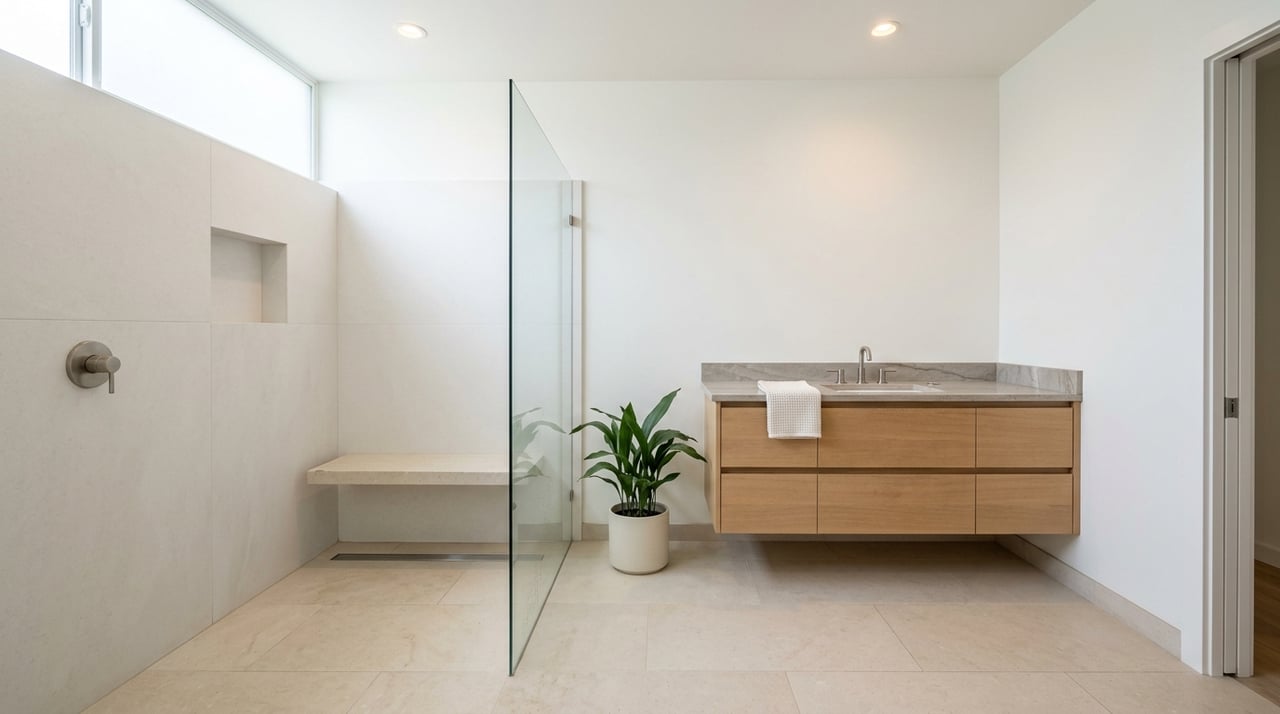
The National Institute on Aging recommends grab bars near toilets and in tubs or showers, along with nonslip strips on wet surfaces. It also highlights the value of good lighting and practical circulation, especially in areas where balance and footing matter most.
Bathroom features that can save you money later
When touring La Mesa homes, look for bathrooms that already have or could more easily support:
- A walk-in shower or space to create one
- Room near the toilet for grab bars
- Slip-resistant flooring or surfaces that could be improved easily
- Good lighting at the vanity and shower
- Enough space to move without tight squeezing or awkward turning
A bathroom that is easier to update can reduce future remodel costs and simplify planning.
Don’t overlook fall prevention basics
Falls are a major concern for older adults. The CDC says more than 1 in 4 adults age 65 and older report falling each year, which makes home safety features more than just nice extras.
The National Institute on Aging recommends secure handrails on both sides of stairs, night lights or motion lighting, and keeping frequently used items within easy reach. In La Mesa, where older homes may have dated stairs or lighting, these details deserve real attention.
Safety details worth checking
During a showing, ask yourself:
- Are there sturdy handrails where they are needed?
- Are hallways and stairways well lit?
- Would night lighting be easy to add?
- Are storage areas convenient, or would you need to reach high or bend low often?
- Are surfaces in wet areas slip resistant?
A home does not need to be perfect on day one. It should, however, give you a realistic path to making it safer.
Think beyond the house itself
The right aging-in-place home is not only about what is inside the property lines. Your access to transportation, health care, and community services can shape how practical a home feels over the long term.
La Mesa’s housing element notes that many older adults rely on public transportation. MTS says the Orange Line serves La Mesa with stops at Grossmont Center, La Mesa Village, and Spring Street, and offers a one-seat ride to downtown San Diego in about 30 minutes or less. MTS also lists MTS Access paratransit and two Park & Ride lots in La Mesa.
That means location matters in a very practical way. A home with easier access to transit may offer more flexibility if driving becomes less convenient later.
Local services to keep in mind
The City’s Adult Enrichment Center at 8450 La Mesa Blvd offers educational, recreational, social, and cultural events, plus daily lunch programs, legal services, referral help, health screenings, exercise, and dance. For some buyers, being closer to the La Mesa Boulevard corridor may add real day-to-day value.
Health care access is another major factor. Sharp Grossmont Hospital serves La Mesa and the surrounding East County area, and Kaiser Permanente’s La Mesa Medical Offices offer urgent care, pharmacy, and laboratory services seven days a week.
Budget for updates before you buy
In La Mesa, it is smart to treat accessibility upgrades as part of the purchase decision, not as an afterthought. Many homes may need some level of updating, especially if they were built decades ago.
If a property needs a new shower, plumbing work, electrical changes, a ramp, or structural improvements, you should factor those costs and timelines into your decision early. That helps you compare homes more realistically and avoid surprises after closing.
Ask permit questions early
La Mesa’s Community Development Department says its Building Division handles plan review, permit processing, and code-compliance inspections for residential work. The City also notes that accessibility retrofits go through the normal building-permit process when a permit is required, and that California Building Code accessibility provisions are actively enforced.
That means permit questions should come up before you commit to a remodel plan. If you are considering a property because you plan to modify it, confirm what may be required for the work you have in mind.
Improvements that may involve permits
Depending on the project, permit needs may come into play for:
- Shower or bathroom reconfiguration
- Electrical changes
- Plumbing changes
- Ramp installation
- Structural alterations
The City’s fee schedule lists separate electrical and plumbing permit categories, which is a good reminder that age-in-place upgrades often involve more than one trade.
Use this showing-day checklist
When you tour homes in La Mesa, keep your focus on long-term usability. A beautiful home can still be the wrong fit if daily living becomes harder there over time.
Here is a practical checklist to bring with you:
- Is the main living area usable without stairs?
- If the home has more than one level, can the first floor function as the long-term living zone?
- Are doorways, halls, and bathrooms easy to navigate and modify later?
- Would the home still work if walking became slower or mobility equipment were needed?
- How close is the home to transit, medical care, and the Adult Enrichment Center?
- Which improvements would likely need permits in La Mesa?
This kind of checklist can help you compare homes with more confidence and less emotion.
A thoughtful plan can protect your future
Finding the right La Mesa home for aging in place is really about buying with both today and tomorrow in mind. You want a home that feels comfortable now, while also giving you options if your needs change later.
That takes a mix of practical thinking, local knowledge, and clear guidance through the buying process. If you are weighing layout, remodel potential, neighborhood access, or long-term value in La Mesa, Edna Mitchell can help you think through your options with care and clarity.
FAQs
What does aging in place mean for La Mesa homebuyers?
- It means choosing a home that can support your comfort, safety, and independence as you get older, ideally with features like main-level living, safer bathrooms, and easier access to services.
What home layout works best for aging in place in La Mesa?
- A single-story layout or a home with a full main-level living setup, including a bedroom and bathroom on the first floor, is often the most practical choice.
What should you check in older La Mesa homes for aging in place?
- Pay attention to stairs, lighting, bathroom setup, doorway width, hall access, thresholds, and how easily the home could be updated for safety and mobility needs.
Do accessibility upgrades in La Mesa usually require permits?
- Some do. Projects such as shower replacements, plumbing or electrical changes, ramps, and structural alterations may involve permits through La Mesa’s normal building-permit process.
Why does location matter for aging in place in La Mesa?
- Location affects your access to transit, medical care, and community services like the Adult Enrichment Center, which can make everyday life easier over time.